

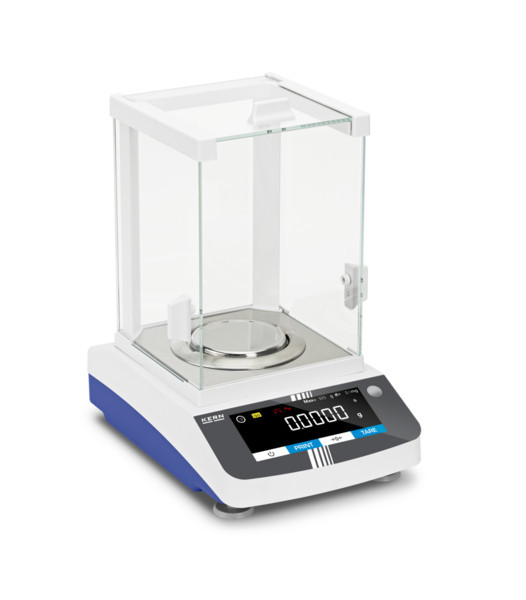
Calibration is essential to maintain analytical balance accuracy and reliability. Regardless of application, even small measurement errors in an analytical balance will compromise results. Regular calibration and performance verification help ensure that your balance continues to deliver precise, traceable measurements throughout its service life.
Analytical Balance Calibration: Best Practices for Accurate, Traceable Weighing
Analytical balances are indispensable tools in laboratories across various industries. They provide precise measurements for research, quality control, and formulation. Maintaining accuracy to ensure reliable readings calls for regular analytical balance calibration. This verifies the relationship between the displayed value and the true mass, confirming the accuracy of the instrument.
Internal and External Calibration: Key Considerations
Purchasers decide between analytical balances offering internal calibration – done within the balance – or external calibration performed manually with calibration weights.
For example, the Kern ADT 300-4 analytical balance features automatic internal calibration. The companion ADS balance is calibrated manually using certified external weights.
Balances with internal calibration offer significant convenience because they automatically compensate for environmental changes such as temperature fluctuations. However, compliance with industry-recognized quality-control procedures requires internally calibrated units to be periodically verified using certified external test weights.
Benefits of External Calibration
- Independent verification – Internal calibration assumes the built-in reference weight remains accurate. Certified external weights provide an independent check to determine that the internal system has – or has not – drifted or malfunctioned.
- Detection of mechanical changes – Over time, internal motors, levers, and reference weights may experience wear, contamination, or slight mechanical shifts that affect weighing performance.
- Regulatory compliance – Quality standards such as ISO/IEC 17025, Good Laboratory Practice (GLP), and Good Manufacturing Practice (GMP) require documented traceability using certified calibration standards.
- Linearity verification – Internal calibration often adjusts only a single calibration point. Testing with multiple certified weights verifies accuracy and linearity across the balance's entire weighing range.
Performance Verification for Balances with Internal Calibration
For balances equipped with internal calibration, external performance verification should become part of the laboratory's quality program.
Typical recommendations include:
- Daily or before critical measurements – Run the balance's automatic internal calibration routine.
- Monthly or quarterly – Verify performance using certified external calibration weights. The appropriate interval depends on laboratory usage, quality requirements, and regulatory obligations.
- Annually – Schedule formal calibration and certification by an accredited calibration laboratory.
- Whenever conditions change – Perform external verification immediately after relocating the balance, completing major maintenance, experiencing power interruptions, or observing questionable weighing results.
Four Steps Supporting Weighing Accuracy
- Run the automatic internal calibration whenever recommended by the manufacturer or before critical weighing procedures.
- Verify performance regularly using certified external weights that are traceable to national or international standards.
- Test multiple weight values to confirm linearity throughout the balance's normal operating range.
- Maintain complete calibration and verification records to support quality audits and regulatory compliance.
Performance Verification for Externally Calibrated Analytical Balances
This method involves using precisely calibrated external test weights to verify accuracy. Weights are placed on the weighing pan, the balance reading is compared to the known weight value, and the balance is adjusted, if necessary, until the displayed value matches the test weight. External calibration is necessary when:
- The balance is subjected to excessive vibration or shocks.
- There are significant temperature fluctuations in the laboratory.
- The balance experiences a power failure.
- The balance is moved to a new location.
- There is a change in balance performance.
Externally calibrated balances are generally less expensive, provide users with more control over the process, and are versatile across a range of balances. However, this method requires manual handling of weights and adjustments, which can be time-consuming and prone to error if not performed correctly.
Choosing the Right Calibration Method
Choosing between internal and external calibration depends on factors including accuracy requirements, frequency of balance use, budget, and laboratory workflow.
If your applications demand the highest level of accuracy, and frequency of use, internal calibration may be preferable. Operators simply run a calibration test before weighing exercises begin – while adhering to the company's verification schedule.
Externally-calibrated balances, while offered at a lower first-cost, require investment in test weights (that also require periodic calibration).
Consider your budget constraints and evaluate how the calibration method will integrate with your existing laboratory workflow.
Our post How to Achieve Precision Weighing with an Analytical Balance is a short summary of important considerations. It may prove helpful in making your decision.
A Resource for Further Discussions
An analytical balance represents a significant investment. The scientists at Tovatech have the experience necessary to help you through evaluation processes and arrive at the correct conclusion. Contact us for unbiased advice on analytical balance purchases.